Anti-Thyroid Peroxidase (Anti-TPO) Assay: Introduction, Test Result, Unit, Normal Range, Test Method, Clinical Significance, and Keynotes

Anti-Thyroid Peroxidase (Anti-TPO) Assay: Introduction, Test Result, Unit, Normal Range, Test Method, Clinical Significance, and Keynotes

Introduction The Anti-Thyroid Peroxidase (Anti-TPO) assay is a diagnostic test used to measure the levels of anti-thyroid peroxidase antibodies in a person’s blood. Thyroid peroxidase (TPO) is an enzyme found in the thyroid gland, which is responsible for the production of thyroid hormones, such as …

Read more

Urinalysis: Introduction, List of Some Common Tests, Test Report, Clinical Significance, and Keynotes

Urinalysis-Introduction, List of Some Common Tests, Test Report, Clinical Significance, and Keynotes

Introduction Urinalysis is a diagnostic medical test that involves the examination of urine to evaluate a person’s health and detect various medical conditions. It is one of the most commonly performed laboratory tests and provides valuable information about the body’s metabolism, kidney function, and overall …

Read more

Folic Acid Test: Introduction, Test Result, Unit, Normal Range, Assaying Method, Clinical Significance, and Keynotes

Folic Acid Test Introduction, Test Result, Unit, Normal Range, Assaying Method, Clinical Significance, and Keynotes

Introduction Folic acid, also known as vitamin B9 or folate, is an essential nutrient required for various bodily functions, including cell division, DNA synthesis, and red blood cell formation. Adequate levels of folic acid are particularly crucial during periods of rapid growth, such as pregnancy, …

Read more

Total Iron-Binding Capacity (TIBC) Test: Introduction, Test Result, Unit, Normal Range, Assaying Method, Clinical Significance, and Keynotes

Total Iron-Binding Capacity (TIBC) Test Introduction, Test Result, Unit, Normal Range, Assaying Method, Clinical Significance, and Keynotes

Introduction The Total Iron-Binding Capacity (TIBC) test is a medical diagnostic tool used to assess the body’s capacity to bind and transport iron in the blood. Iron is an essential mineral required for various physiological processes, including oxygen transport and energy production. The TIBC test …

Read more

Candida tropicalis: Introduction, Morphology, Pathogenicity, Lab Diagnosis, Treatment, Prevention, and Keynotes

Various Candida species grew on Candida CHROMAgar -Candida albicans (green), Candida tropicalis (cream-colored to light pink colonies), Candida glabrata (purple to lavender-color), Candida krusei(dark blue to mauve colonies), and Candida parapsilosis (cream-colored) as shown in the figure.

Introduction Candida tropicalis is a species of yeast, belonging to the Candida genus, commonly found in the environment and on the human body as part of the normal microbial flora. Similar to other Candida species, it can exist as a commensal organism, coexisting harmlessly with …

Read more

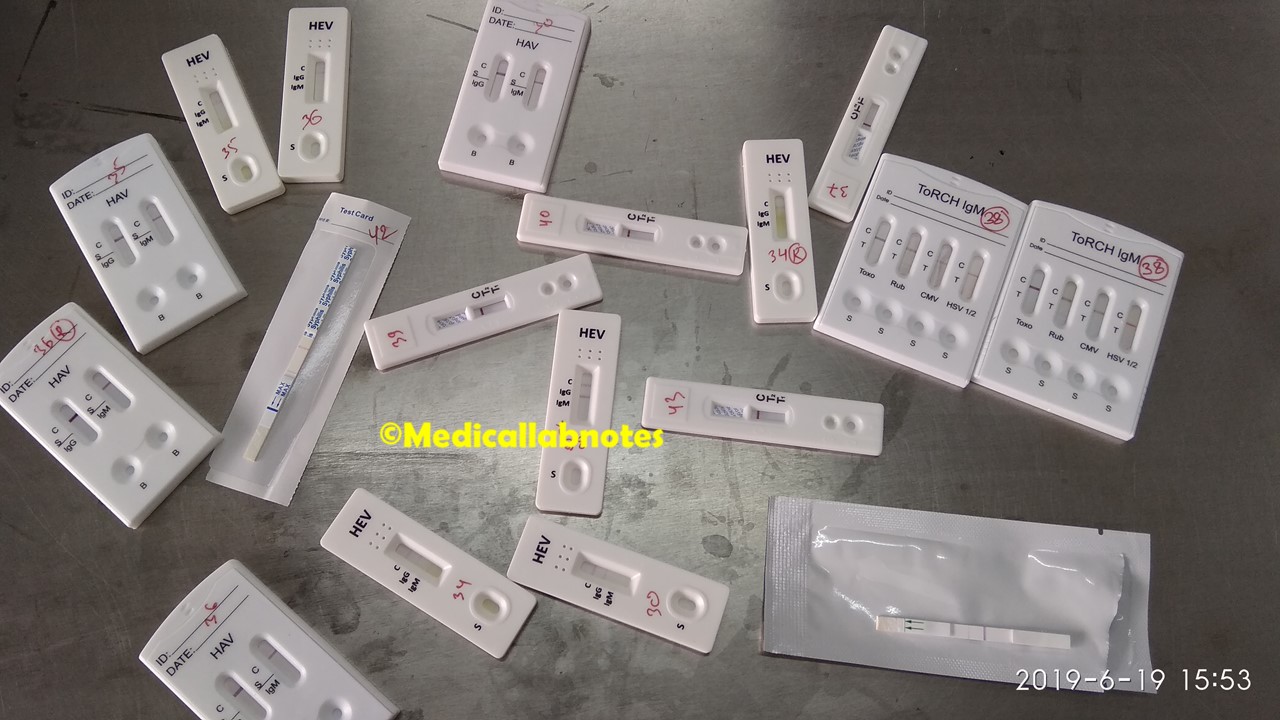
Immunochromatography: Introduction, Principle, Procedure, Result-Interpretation, Uses and Keynotes

Rapid tests based on Immunochromatography- Hepatitis A virus, Hepatitis E virus, Syphilis rapid test, ToRCH Rapid test and more

Introduction Immunochromatography, also known as lateral flow immunoassay or rapid test, is a widely used diagnostic technique that allows for the rapid and qualitative detection of specific target substances, such as antigens or antibodies, in various biological samples. It is a simple, cost-effective, and user-friendly …

Read more

Kidney Function Tests (KFTs): Introduction, Test Result, Unit, Reference Range, Test Methods,and Keynotes

Kidney Function Tests (KFTs)-Introduction, Test Result, Unit, Reference Range, Test Methods,and Keynotes

Introduction Kidney Function Tests (KFTs), also known as Renal Function Tests (RFTs), are a group of laboratory tests that provide important information about the functioning of the kidneys. These tests help doctors assess the health of the kidneys, detect kidney diseases, and monitor the effectiveness …

Read more

24-hour Urine Protein Test: Introduction, ,Test Result, Unit, Reference Range, Clinical Significance,and Keynotes

24-hour Urine Protein Test Introduction, ,Test Result, Unit, Reference Range, Clinical Significance,and Keynotes

Introduction The 24-hour urine protein test is a diagnostic procedure used to measure the amount of protein excreted in a person’s urine over a 24-hour period. It is an essential test for assessing kidney function, identifying kidney diseases, and monitoring the progression of certain conditions. …

Read more