Shewanella: Introduction, Morphology, Pathogenicity, Lab Diagnosis, Treatment, Prevention, and Keynotes

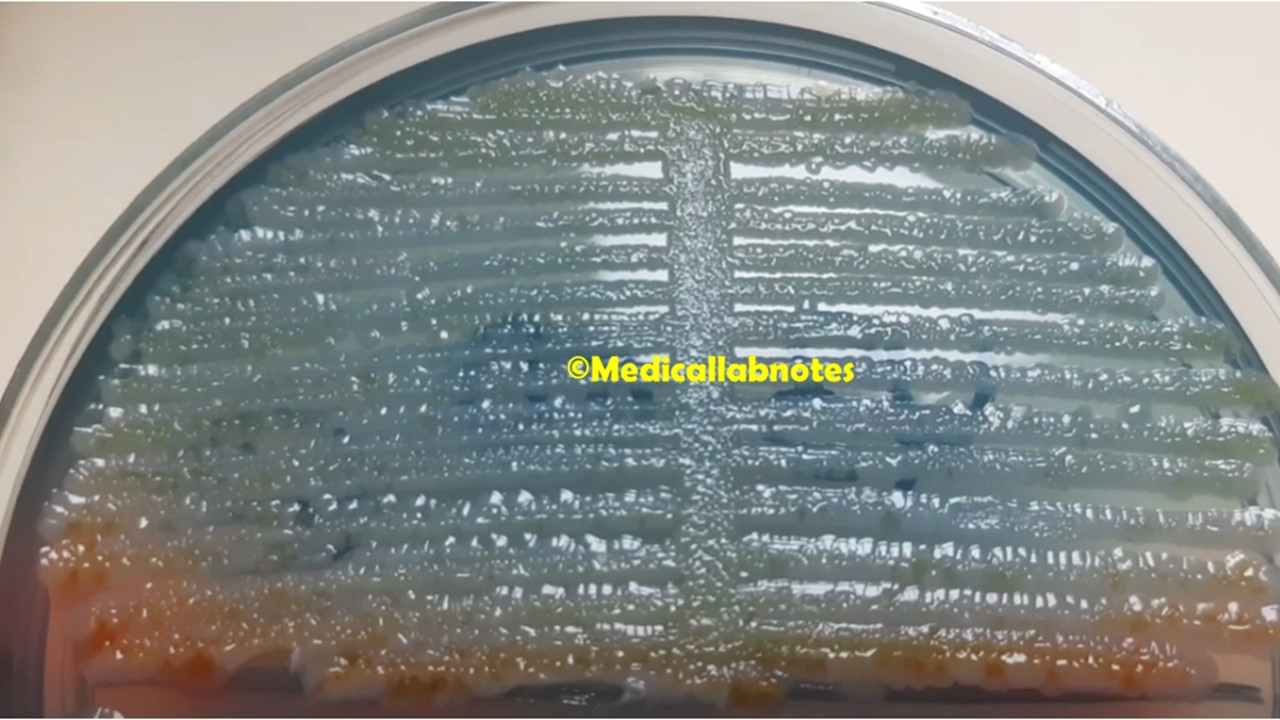
Shewanella species colony characteristics on Muller-Hinton agar (MHA)

Introduction Shewanella is a genus of Gram-negative, facultative anaerobic bacteria that belongs to the family Shewanellaceae. These bacteria are known for their remarkable versatility and adaptability to a wide range of environmental conditions. They were first discovered in 1980 by researchers studying microbial fuel cells, …

Read more

Clostridium: Introduction, Morphology, Pathogenicity, Lab Diagnosis, Treatment, Prevention, and Keynotes

Clostridium growth on blood agar under anaerobic condition of 48 hours- inhibition of growth around metronidazole but no effect towards gentamicin

Introduction Clostridium is a genus of Gram-positive, rod-shaped, spore-forming bacteria that belongs to the phylum Firmicutes. These bacteria are anaerobic, meaning they can thrive in environments devoid of oxygen. The name “Clostridium” is derived from the Greek word “kloster,” which means spindle, referring to their …

Read more

Moraxella catarrhalis: Introduction, Morphology, Pathogenicity, Lab Diagnosis, Treatment, Prevention, and Keynotes

Gram negative cocci in pairs (diplococci) of Moraxella catarrhalis in Gram staining of culture microscopy at a magnification

Introduction Moraxella catarrhalis is a Gram-negative, aerobic bacterium that belongs to the Moraxellaceae family. It is a non-motile, non-spore-forming bacterium, and it is typically found in the upper respiratory tract of humans as a commensal organism. Though generally considered a commensal, M. catarrhalis can also …

Read more

Gardnerella vaginalis: Introduction, Morphology, Pathogenicity, Lab Diagnosis, Treatment, Prevention, and Keynotes

Introduction Gardnerella vaginalis is a Gram-variable bacterium that is considered to be a facultative anaerobe, meaning it can survive in both aerobic and anaerobic environments. It is the main causative agent of bacterial vaginosis (BV), a common vaginal infection in women of reproductive age. BV …

Read more

Chlamydia pneumoniae: Introduction, Morphology, Pathogenicity, Lab Diagnosis, Treatment, Prevention, and Keynotes

Introduction Chlamydia pneumoniae, also known as Chlamydophila pneumoniae, is a species of bacteria that belongs to the Chlamydiaceae family. It is an obligate intracellular pathogen, meaning it can only survive and replicate inside the cells of its host. It primarily infects the respiratory system, causing …

Read more

Mycobacterium leprae: Introduction, Morphology, Pathogenicity, Lab Diagnosis, Treatment, Prevention, and Keynotes

Heavy load of acid fast bacilli (AFB) of Mycobacterium leprae in modified Ziehl-Neelsen staining of slit skin smear microscopy at a magnification of 1000X

Introduction Mycobacterium leprae is the bacterium responsible for causing leprosy, also known as Hansen’s disease. It is an ancient disease that has afflicted humans for thousands of years, and it continues to be a significant public health concern in some parts of the world. M. …

Read more

Herpes Simplex Virus (HSV): Introduction, Morphology, Pathogenicity, Lab Diagnosis, Treatment, Prevention, and Keynotes

Tzanck Smear- Positive of Herpes Simplex Virus (HSV)

Introduction Herpes Simplex Virus (HSV) is a common and highly contagious virus that infects humans. It belongs to the family Herpesviridae and is characterized by its ability to establish a lifelong infection in the host. HSV exists in two main types: HSV-1 and HSV-2. Transmission: …

Read more

Mycobacterium tuberculosis: Introduction, Morphology, Pathogenicity, Lab Diagnosis, Treatment, Prevention, and Keynotes

Mycobacterium tuberculosis colony morphology on LJ medium

Introduction Mycobacterium tuberculosis is a bacterium that causes tuberculosis (TB), a contagious infectious disease primarily affecting the lungs but can also affect other parts of the body. TB has been a significant public health concern worldwide, causing illness and death for thousands of years. Key …

Read more