Epidermophyton floccosum: Introduction, Morphology, Pathogenicity, Lab Diagnosis, Treatment, Prevention, and Keynotes

Introduction Epidermophyton floccosum is a dermatophyte fungus belonging to the group of fungi responsible for causing superficial fungal infections in humans and animals. Dermatophytes are known for their ability to infect the skin, hair, and nails, causing conditions collectively referred to as dermatophytosis or ringworm …

Read more

Sporothrix schenckii: Introduction, Morphology, Pathogenicity, Lab Diagnosis, Treatment, Prevention, and Keynotes

Sporothrix schenckii colony morphology on SDA

Introduction Sporothrix schenckii is a dimorphic fungus and the causative agent of the infection known as sporotrichosis or “rose gardener’s disease.” It is a relatively common fungal pathogen found worldwide, and it primarily affects the skin and subcutaneous tissues, although it can occasionally spread to …

Read more

Trichophyton mentagrophytes: Introduction, Morphology, Pathogenicity, Lab Diagnosis, Treatment, Prevention, and Keynotes

Colony morphology of Trichophyton mentagrophytes on dermatophyte test medium (DTM) plate and tube

Introduction Trichophyton mentagrophytes is a dermatophyte fungus belonging to the genus Trichophyton, which is known for causing various skin infections in humans and animals. It is an anthropophilic fungus, meaning it primarily infects humans, but it can also infect animals like rodents and domesticated pets. …

Read more

Penicillium marneffei: Introduction, Morphology, Pathogenicity, Lab Diagnosis, Treatment, Prevention, and Keynotes

Conidia, conidiophore, phialide,and metullae of Penicillium marneffei in LPCB tease mount of culture microscopy at a magnification of 400X

Introduction Penicillium marneffei is a thermally dimorphic fungus and a significant human pathogen, causing a rare but severe disease called penicilliosis marneffei. It is classified under the phylum Ascomycota and the family Talaromycetaceae. The fungus was first discovered and described by a French physician, Captain …

Read more

Cryptococcus neoformans: Introduction, Morphology, Pathogenicity, Lab Diagnosis, Treatment, Prevention, and Keynotes

Abundant Yeast cells with occasional hyphae of Cryptococcus neoformans in India ink preparation of culture microscopy

Introduction Cryptococcus neoformans is a pathogenic fungus and one of the leading causes of fungal infections in humans. It belongs to the genus Cryptococcus, which includes several species, but C. neoformans is the most clinically significant one. This fungus primarily affects immunocompromised individuals, such as …

Read more

Aspergillus fumigatus: Introduction, Morphology, Pathogenicity, Lab Diagnosis, Treatment, Prevention, and Keynotes

Aspergillus fumigatus colony morphology on Czapek-Dox agar plate

Introduction Aspergillus fumigatus is a filamentous fungus and one of the most common and clinically relevant species in the Aspergillus genus. It is widely distributed in the environment and can be found in soil, compost, decaying vegetation, and indoor environments. It is known for its …

Read more

Aspergillus flavus: Introduction, Morphology, Pathogenicity, Lab Diagnosis, Treatment, Prevention, and Keynotes

Aspergillus flavus colony morphology on Czapek Dox Agar plate

Introduction Aspergillus flavus is a filamentous fungus belonging to the Aspergillus genus, which comprises a wide variety of mold species. This particular species is commonly found in the environment and is known for its economic and medical significance. It is commonly associated with food and …

Read more

Aspergillus niger: Introduction, Morphology, Pathogenicity, Lab Diagnosis, Treatment, Prevention, and Keynotes

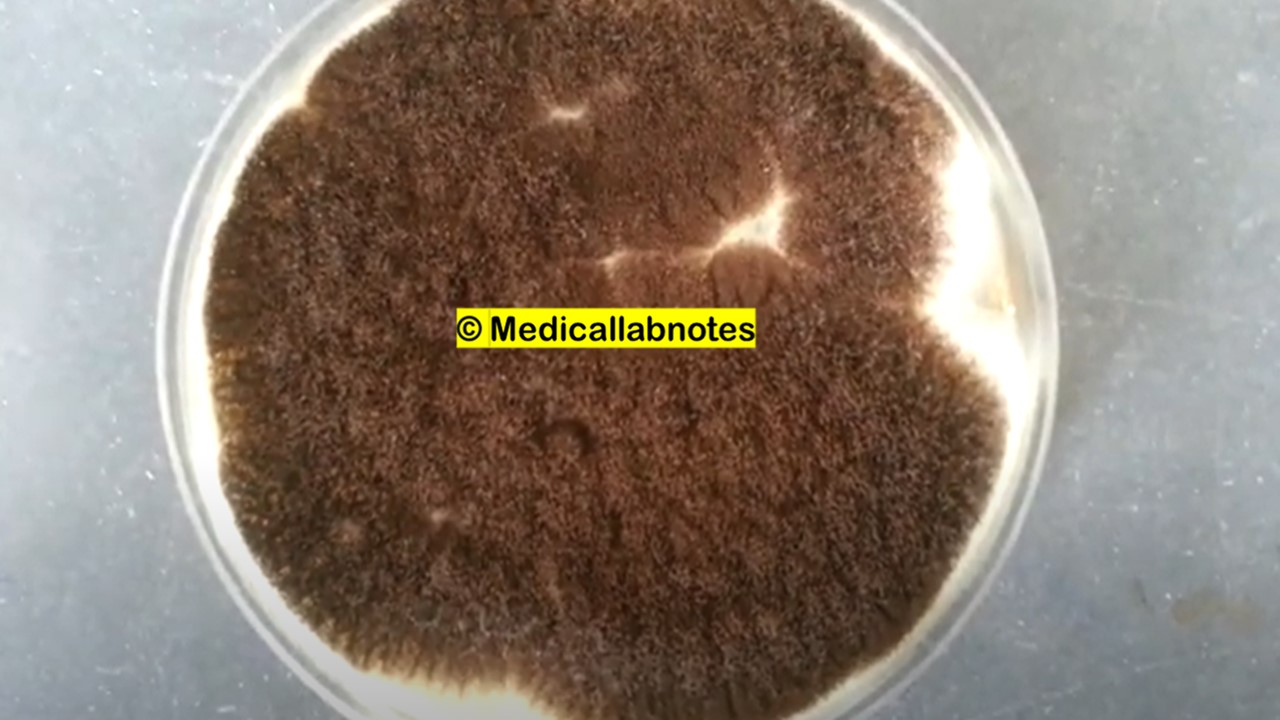
Aspergillus niger growth on SDA-conidia expressing a distinguishing feature- typically globose or elliptical in shape and have a dark color, ranging from dark green to black

Introduction Aspergillus niger is a filamentous fungus belonging to the genus Aspergillus. It is commonly found in the environment, especially in soil, decaying plant matter, and indoor environments such as homes and offices. It is known for its ability to produce a wide range of …

Read more