E. coli MCQs Quiz: A Set of Questions, Options, and Answers

Introduction Here is a set of Multiple Choice Questions (MCQs) on E. coli (Escherichia coli) as a quiz. E. coli MCQ Quiz 1. What is Escherichia coli (E. coli)? A) VirusB) BacteriumC) FungusD) Parasite 2. E. coli is classified under which bacterial group? A) Gram-positive …

Read more

Human Metapneumovirus (HMPV) MCQs Quiz-A simple set of Questionnaire for Examination

Human Metapneumovirus (HMPV) MCQs Quiz Here is a set of 10 Multiple-Choice Questions (MCQs) with solutions regarding Human Metapneumovirus (HMPV): Answer Sheet with Explanation for Human Metapneumovirus (HMPV) MCQs Quiz

Enterococcus gallinarum – Introduction, Morphology, Pathogenicity, Lab Diagnosis, Treatment, Prevention, and Keynotes

E. gallunarum in Gram stain of culture showing Gram positive cocci in pairs

Introduction Enterococcus gallinarum is a Gram-positive, facultatively anaerobic bacterium. It naturally inhabits the intestines of humans and animals. This bacterium exhibits intrinsic resistance to vancomycin. It can cause infections in immunocompromised patients. It is associated with urinary tract infections and bacteremia. Proper laboratory techniques are …

Read more

Cedecea davisae- Introduction, Morphology, Pathogenicity, Lab Diagnosis, Treatment, Prevention, and Keynotes

Cedecea in wet mount of culture microscopy

Introduction Cedecea davisae is a rare, opportunistic pathogen in the Enterobacteriaceae family. It was first isolated from a human wound. This bacterium can cause infections in immunocompromised individuals. It exhibits resistance to several antibiotics. It is often misidentified due to its rarity. However, proper laboratory …

Read more

Microsporum ferrugineum: Introduction, Morphology, Pathogenicity, Lab Diagnosis, Treatment, Prevention, and Keynotes

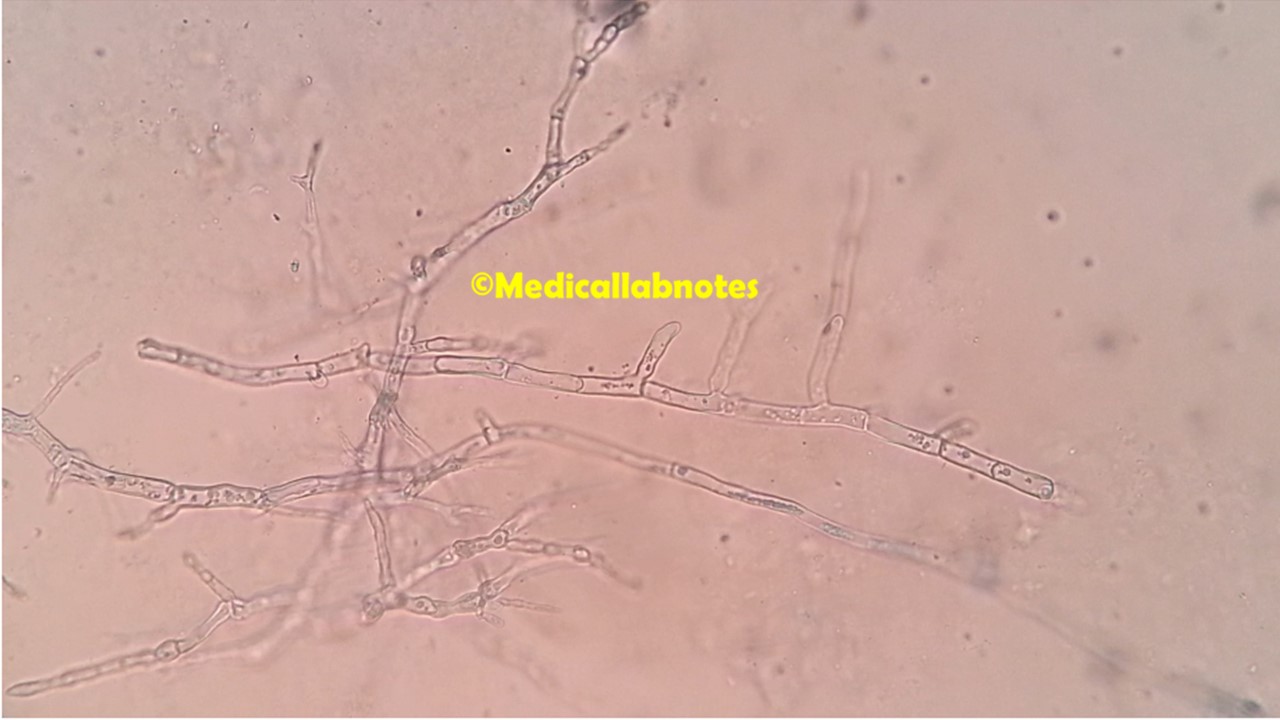
Microsporum ferrugineum in LPCB taese mount of culture microscopy showing typical bamboo hyphae and lacking production of both microconidia and macroconidia

Introduction Microsporum ferrugineum is a species of dermatophytic fungus that belongs to the genus Microsporum. Dermatophytes are a group of fungi that are capable of infecting and colonizing the outer layers of the skin, hair, and nails, causing various dermatophytosis or “ringworm” infections in humans …

Read more

Enteroviruses: Introduction, Morphology, Pathogenicity, Lab Diagnosis, Treatment, Prevention, and Keynotes

Introduction Enteroviruses are a group of viruses that belong to the Picornaviridae family. They are a diverse group of viruses that can cause a wide range of illnesses, from mild cold-like symptoms to more serious diseases. Enteroviruses primarily infect the gastrointestinal tract and can spread …

Read more

Chlamydia pneumoniae: Introduction, Morphology, Pathogenicity, Lab Diagnosis, Treatment, Prevention, and Keynotes

Introduction Chlamydia pneumoniae, also known as Chlamydophila pneumoniae, is a species of bacteria that belongs to the Chlamydiaceae family. It is an obligate intracellular pathogen, meaning it can only survive and replicate inside the cells of its host. It primarily infects the respiratory system, causing …

Read more

Herpes Simplex Virus (HSV): Introduction, Morphology, Pathogenicity, Lab Diagnosis, Treatment, Prevention, and Keynotes

Tzanck Smear- Positive of Herpes Simplex Virus (HSV)

Introduction Herpes Simplex Virus (HSV) is a common and highly contagious virus that infects humans. It belongs to the family Herpesviridae and is characterized by its ability to establish a lifelong infection in the host. HSV exists in two main types: HSV-1 and HSV-2. Transmission: …

Read more