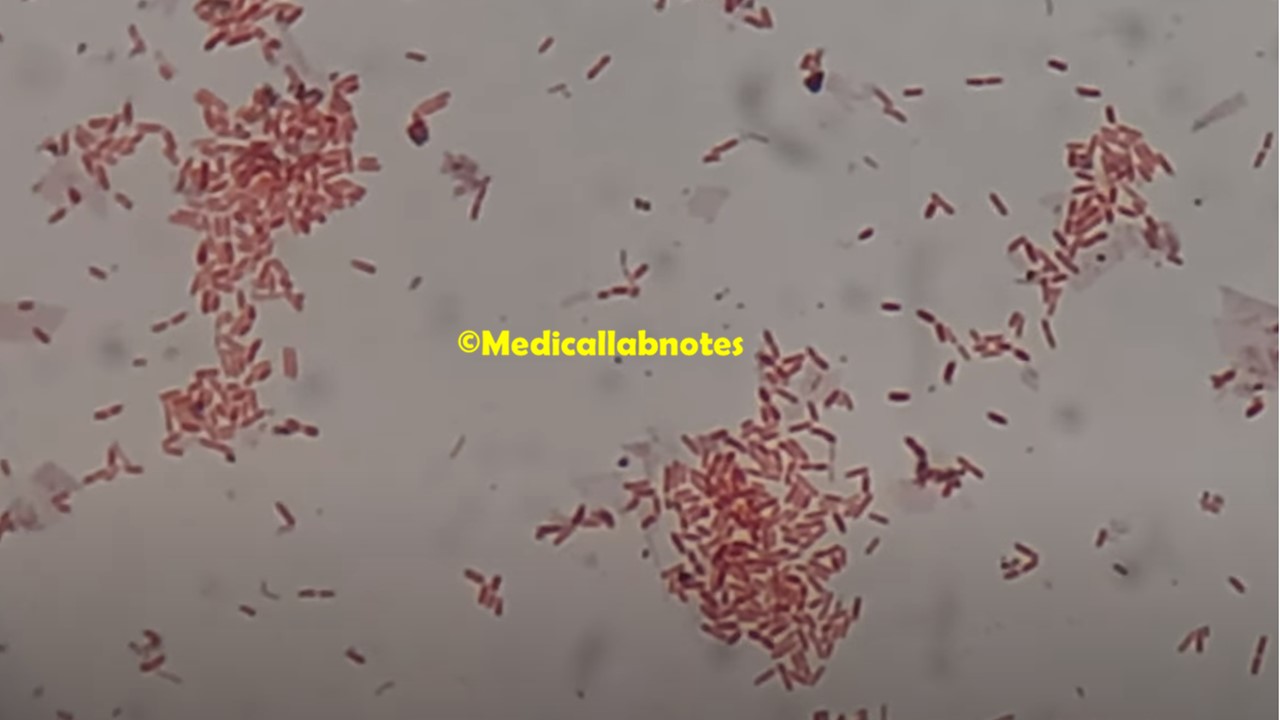
Escherichia coli: Introduction, Morphology, Pathogenicity, Lab Diagnosis, Treatment, Prevention, and Keynotes

Greenish metallic sheen of Escherichia coli on Eosin Methylene Blue (EMB) Agar

Introduction Escherichia coli, often abbreviated as E. coli, is a gram-negative, rod-shaped bacterium belonging to the Enterobacteriaceae family. It is one of the most commonly studied and well-known bacteria, both because of its importance in scientific research and its relevance in various aspects of human …

Read more

Citrobacter koseri: Introduction, Morphology, Pathogenicity, Lab Diagnosis, Treatment, Prevention, and Keynotes

Mucoid colony of Citrobacter koseri on CLED agar of urine specimen

Introduction Citrobacter koseri, formerly known as Citrobacter diversus, is a gram-negative bacterium belonging to the Enterobacteriaceae family. It is a facultative anaerobe, meaning it can grow both in the presence and absence of oxygen. The species name “koseri” is a tribute to the bacteriologist Leo …

Read more

Compound Microscope: Introduction, Principle, Parts, Uses, Care and Maintenance, and Keynotes

Compound Microscope- Introduction, Principle, Parts, Uses, Care and Maintenance, and Keynotes_

Introduction The compound microscope is a fundamental and widely used optical instrument that allows us to magnify and observe small objects or specimens that are otherwise invisible to the naked eye. It is an essential tool in various scientific fields, including biology, medicine, microbiology, and …

Read more

Simple Microscope: Introduction, Principle, Parts, Uses, Care and Maintenance, and Keynotes

Introduction A simple microscope is a basic optical instrument used for magnifying small objects or specimens that are not visible to the naked eye. It consists of a single lens that can be either convex or concave, mounted in a frame with a handle or …

Read more

Semen Culture and Sensitivity: Introduction, Report, Clinical Significance, Common Pathogens, and Keynotes

Semen Culture and Sensitivity: Introduction, Report, Clinical Significance, Common Pathogens, and Keynotes

Introduction Semen culture and sensitivity is a medical test used to evaluate the presence of microorganisms in a man’s semen (ejaculate) and determine their susceptibility to various antibiotics. It is an essential diagnostic tool used to investigate male reproductive health issues, particularly when there are …

Read more

Streptococcus agalactiae: Introduction, Morphology, Pathogenicity, Lab Diagnosis, Treatment, Prevention, and Keynotes

Introduction Streptococcus agalactiae, also known as Group B Streptococcus (GBS), is a Gram-positive bacterium that belongs to the Streptococcaceae family. It is a significant human pathogen and is commonly found in the gastrointestinal and genitourinary tracts of healthy adults. While it may not cause any …

Read more

Nasal Swab Culture and Sensitivity: Introduction, Report, Clinical Significance, Common Pathogens, and Keynotes

Nasal Swab Culture and Sensitivity Introduction, Report, Clinical Significance, Common Pathogens, and Keynotes

Introduction Nasal swab culture and sensitivity is a diagnostic laboratory test used to identify and determine the antibiotic sensitivity of microorganisms present in the nasal passages. It is a valuable tool in the diagnosis and management of various respiratory infections, particularly those caused by bacteria. …

Read more

Eye Flu: Introduction,Causes, Symptoms, Effective Treatment, Prevention and Keynotes

Introduction Eye flu, also known as conjunctivitis, is a common and highly contagious eye infection that affects the conjunctiva, the thin and transparent layer covering the white part of the eye and the inner surface of the eyelids. It is characterized by redness, irritation, and …

Read more