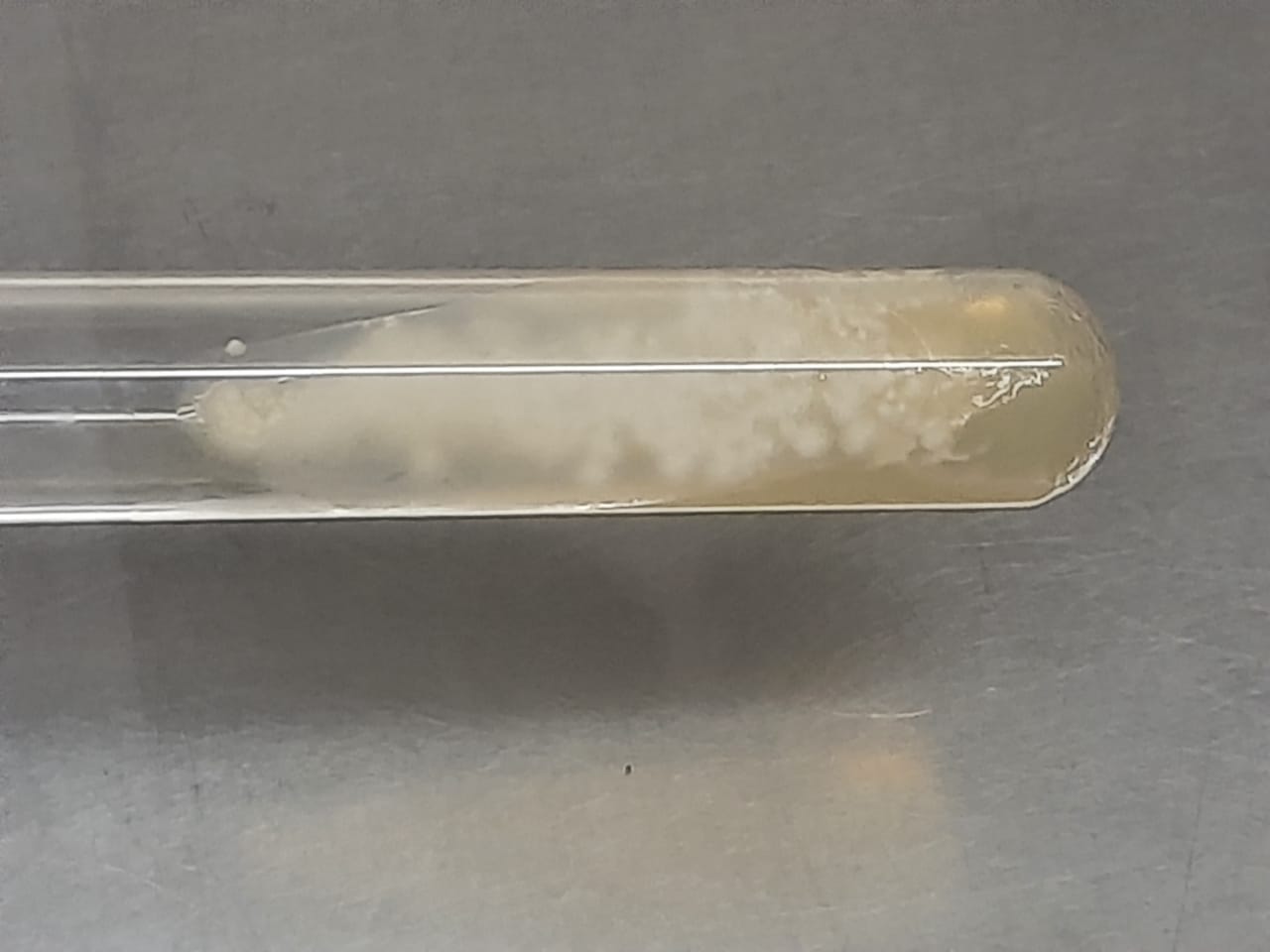
Wade-Fite stain:Introduction, Principle, Test Requirements, Staining Procedure, Result Interpretation,and Keynotes

Wade-Fite stain:Introduction, Principle, Test Requirements, Staining Procedure, Result Interpretation,and Keynotes

Introduction The Ziehl-Neelsen stain, also known as the Wade-Fite stain, is a modified acid-fast staining technique specifically used to detect Mycobacterium leprae in tissue sections, particularly skin biopsies. It preserves the lipid-rich capsule of M. leprae, which is essential for its identification. It is a …

Read more

MB-Redox Medium-Introduction, Principle, Clinical Significance, Advantage, Disadvantage, and Keynotes

Introduction MB-Redox Medium (Mycobacteria-Redox Medium) is a liquid culture medium designed for the rapid growth and detection of Mycobacteria, particularly Mycobacterium tuberculosis. It incorporates redox indicators that change color based on microbial metabolic activity, providing a visual cue for bacterial growth. It is increasingly used …

Read more

Grocott’s Methenamine Silver (GMS) Staining of Mycobacteria:Introduction, Principle, Clinical Significance, Advantage, Disadvantage, and Keynotes

Introduction Grocott’s Methenamine Silver (GMS) stain is a histochemical staining method primarily used to detect fungi in tissue sections. However, it can also stain certain acid-fast organisms like Mycobacteria, especially in tissue biopsies where standard Ziehl-Neelsen or fluorescent stains may miss them. The technique enhances …

Read more

Carbol-Nachtblau Staining of Mycobacteria-Introduction, Principle, Clinical Significance, Advantage, Disadvantage, and Keynotes

Introduction Carbol-Nachtblau (Midnight Blue) staining is a modified acid-fast staining technique used for the visualization of Mycobacteria, particularly Mycobacterium tuberculosis. This method replaces the traditional counterstain (like methylene blue) with Nachtblau, producing a vivid contrast between blue background cells and bright red acid-fast bacilli (AFB), …

Read more

Immunofluorescent Detection of Mycobacteria Using Polyclonal Anti-BCG Antibody Staining: Introduction, Principle, Clinical Significance, Advantage, Disadvantage, and Keynotes

Introduction Immunofluorescent staining with polyclonal anti-BCG antibodies is a rapid and specific technique used to detect Mycobacterium species, particularly in clinical and research settings. These antibodies recognize antigenic components of Mycobacterium bovis BCG strain and cross-react with members of the M. tuberculosis complex. The method …

Read more

Penicillium vs Paecilomyces: Introduction, Detailed Comparison, Pathogenicity, Lab Diagnosis, Treatment, Prevention, and Keynotes

Penicillium typical structure in LPCB preparation

Introduction of Penicillium vs Paecilomyces Penicillium is a ubiquitous, saprophytic mold found in soil, air, and decaying organic matter. Known for producing the first antibiotic, penicillin, it is typically non-pathogenic but occasionally causes opportunistic infections in immunocompromised hosts. Paecilomyces (especially P. lilacinus and P. variotii) …

Read more

Yeasts vs Molds: Detailed Comparison, Mixed Growth Isolation, Approach to Mixed Growth Handling, and Mixed Growth Interpretation

Yeast and mold mixed growth on SDA

Yeasts vs Molds: Detailed Comparison Feature Yeasts Molds Definition Unicellular fungi Multicellular filamentous fungi Structure Oval/round, single cells Hyphae form mycelium; septate or aseptate Reproduction Asexual (budding or fission); some sexual forms Asexual (spores like conidia/sporangia); sexual spores Hyphae Absent, but pseudohyphae may be present …

Read more