Staphylococcus aureus MCQs Quiz: A Set of Questions, Options, and Answers

Introduction Here is a Staphylococcus aureus MCQs Quiz Set with questions, options, and answers. Staphylococcus aureus MCQs Quiz 1. What type of organism is Staphylococcus aureus? A) VirusB) Gram-positive bacteriumC) Gram-negative bacteriumD) Fungus 2. How does Staphylococcus aureus appear under Gram staining? A) Gram-negative rodsB) …

Read more

Streptococcus gallolyticus – Introduction, Morphology, Pathogenicity, Lab Diagnosis, Treatment, Prevention, and Keynote

Streptococcus gallolytucus in a wet mount of culture microscopy at a magnification of 1600X

Introduction Streptococcus gallolyticus is a Gram-positive bacterium. It belongs to the Streptococcus bovis group. This bacterium often inhabits the gastrointestinal tract. S. gallolyticus can cause endocarditis and bacteremia. Moreover, it is associated with colorectal cancer. Researchers use it to study host-pathogen interactions. Identifying S. gallolyticus …

Read more

Gemella morbillorum-Introduction, Morphology, Pathogenicity, Lab Diagnosis, Treatment, Prevention, and Keynotes

Gemella morbillorum in Gram staining of culture microscopy

Introduction Gemella morbillorum is a gram-positive bacterium, typically found in the human mouth, throat, and respiratory tract. It occasionally causes infections, particularly in immunocompromised individuals or those with underlying health conditions. Common infections include endocarditis, bacteremia, and abscesses. Notably, it can lead to serious complications …

Read more

Enterococcus faecium: Introduction, Morphology, Pathogenicity, Lab Diagnosis, Treatment, Prevention, and Keynotes

Gram positive cocci in singles, pairs and chains of Enterococcus faecium in Gram staining of culture microscopy

Introduction Enterococcus faecium is a bacterium that belongs to the Enterococcus genus, which is a part of the Firmicutes phylum. It is a Gram-positive, facultative anaerobic coccus, typically occurring in pairs or short chains. Enterococci are commensal bacteria commonly found in the gastrointestinal tract of …

Read more

Methicillin-resistant Staphylococcus aureus (MRSA): Introduction, Morphology, Pathogenicity, Symptoms, Lab Diagnosis, Treatment, Prevention, and Keynotes

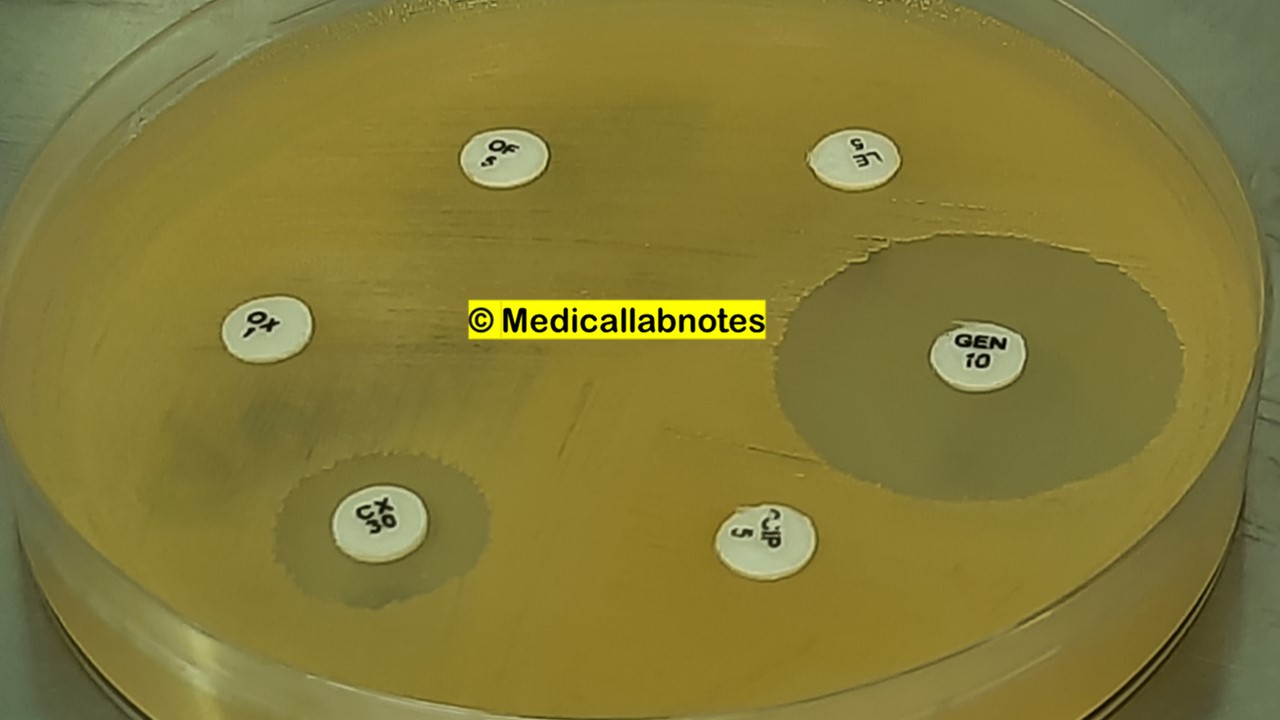
Nasal Methicillin-resistant Staphylococcus aureus (MRSA) Carriage expressing Cefoxitin and Oxacillin Resistance on Muller-Hinton agar (MHA)

Introduction Methicillin-resistant Staphylococcus aureus, commonly known as MRSA, is a type of bacteria that has developed resistance to multiple antibiotics, including methicillin and other beta-lactam antibiotics like penicillin and cephalosporins. Staphylococcus aureus is a bacterium that can naturally colonize the skin and mucous membranes of …

Read more

Enterococcus: Introduction, Morphology, Pathogenicity, Lab Diagnosis, Treatment, Prevention, and Keynotes

Enterococcus faecium colony characteristics on CLED agar of Urine Culture

Introduction Enterococcus is a genus of Gram-positive bacteria that are part of the normal microbial flora of humans and animals. They are facultative anaerobes, meaning they can survive in both the presence and absence of oxygen. Enterococcus species are known for their ability to thrive …

Read more

Streptococcus oralis: Introduction, Morphology, Pathogenicity, Lab Diagnosis, Treatment, Prevention, and Keynotes

Streptococcus oralis colony morphology on MacConkey agar

Introduction Streptococcus oralis is a gram-positive bacterium that belongs to the genus Streptococcus. It is a commensal bacterium that commonly inhabits the human oral cavity, along with other oral streptococci. S. oralis is considered a part of the normal oral microbiota and can be found …

Read more

Staphylococcus lentus: Introduction, Morphology, Pathogenicity, Lab Diagnosis, Treatment, Prevention, and Keynotes

Serratia ficaria on CLED Agar of Urine Culture

Introduction Staphylococcus lentus is a species of Gram-positive bacteria belonging to the genus Staphylococcus. It is classified as a coagulase-negative staphylococcus (CoNS), which means it does not produce the enzyme coagulase. CoNS are commonly found as part of the normal human skin and mucous membrane …

Read more