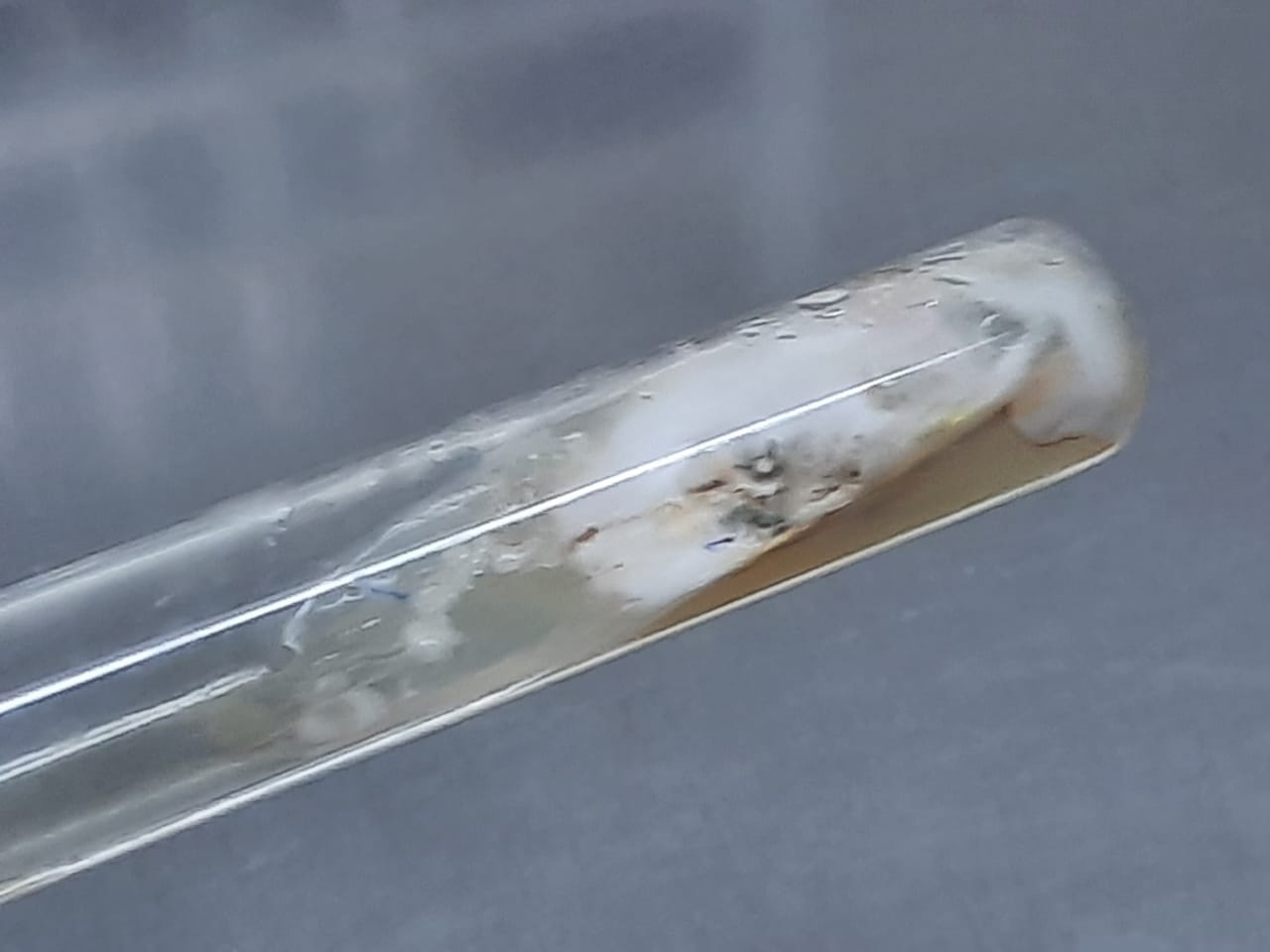
Mold Identification by MALDI-TOF (BRUKER)-Introduction, Principle, Clinical Significance, and Keynotes

Introduction Accurate and timely identification of molds is essential for clinical microbiology, especially in cases of invasive fungal infections caused by Aspergillus, Fusarium, Scedosporium, Mucorales, and other filamentous fungi. Traditional methods based on morphology and phenotypic characteristics are slow, require expertise, and may misidentify cryptic …

Read more

Aspergillus niger Vs Aspergillus fumigatus-Introduction, Differences, Keynotes, and Related Footage

Aspergillus niger and Aspergillus fumigatus growth on Sabouraud dextrose agar (SDA) after 7 days of incubation

Introduction Key Differences: Aspergillus niger vs Aspergillus fumigatus Feature Aspergillus niger Aspergillus fumigatus Colony color (SDA) Black, powdery colonies Blue-green to gray-green colonies Growth rate Rapid, abundant sporulation Moderate, compact colonies Conidial heads Large, radiate, globose Columnar, compact Conidia Rough, black, spherical Smooth to rough, …

Read more

MDR Candida NGS:Introduction, Principle, Test Requirements, Procedure, Result-Interpretation, Clinical Significance, and Keynotes

MDR Candida NGS:Introduction, Principle, Test Requirements, Procedure, Result-Interpretation, Clinical Significance, and Keynotes

 Introduction of MDR Candida NGS MDR Candida NGS refers to the use of Next-Generation Sequencing for the detection, identification, and resistance gene profiling of multidrug-resistant (MDR) Candida species, such as Candida auris, Candida glabrata, and others resistant to azoles, echinocandins, or polyenes. Next-generation sequencing (NGS) …

Read more

Yeasts vs Molds: Detailed Comparison, Mixed Growth Isolation, Approach to Mixed Growth Handling, and Mixed Growth Interpretation

Yeast and mold mixed growth on SDA

Yeasts vs Molds: Detailed Comparison Feature Yeasts Molds Definition Unicellular fungi Multicellular filamentous fungi Structure Oval/round, single cells Hyphae form mycelium; septate or aseptate Reproduction Asexual (budding or fission); some sexual forms Asexual (spores like conidia/sporangia); sexual spores Hyphae Absent, but pseudohyphae may be present …

Read more

Mycosel Agar: Introduction, Principles, Application, Keynotes, and further Readings

Mycosel Agar Introduction, Principles, Application, Keynotes, and further Readings

Introduction Mycosel Agar is a selective culture medium to isolate pathogenic fungi from samples containing a mix of fungi and bacteria. It’s designed to suppress the growth of non-pathogenic fungi and bacteria, allowing for the isolation and identification of pathogenic fungi.  Principle Cycloheximide inhibits the growth …

Read more

Penicillium cheresanum: Introduction, Morphology, Pathogenicity, Lab Diagnosis, Treatment, Prevention, and Keynotes

Penicillium cheresanum: Introduction, Morphology, Pathogenicity, Lab Diagnosis, Treatment, Prevention, and Keynotes

Introduction Penicillium cheresanum is a species of mold belonging to the genus Penicillium, commonly found in soil and decaying organic matter. Moreover, it thrives in a variety of environments, demonstrating its adaptability to different ecological conditions. In addition, this mold is known for producing secondary …

Read more

Next-Generation Sequencing (NGS) in Clinical Mycology-Introduction, Application, and Keynote

Next-Generation Sequencing (NGS) in Clinical Mycology-Introduction, Application, and Keynote

Introduction Next-generation sequencing (NGS) in Clinical Mycology is revolutionizing the diagnosis, typing, and antifungal resistance profiling of fungal pathogens. Application Here’s an overview of its applications: Candida spp.: Aspergillus spp.: CYP51A: Azole resistance due to mutations in ergosterol synthesis. Advantages of NGS in Clinical Mycology …

Read more