Middlebrook 7H9 Broth: Introduction, Composition, Principle, Procedure, Result-Interpretation, Uses, and Keynotes

The BBL MGIT tube, showing Modified Middlebrook 7H9 Broth paired with an oxygen-sensitive fluorescent sensor for rapid diagnostic results

Introduction Middlebrook 7H9 broth is a liquid growth medium first described in 1958 by Middlebrook and Cohn for the specialized cultivation of Mycobacterium species. It is widely used in clinical and research settings for rapid growth, biochemical testing, and preparing inocula for drug susceptibility testing …

Read more

Aspergillus terreus: Introduction, Morphology, Pathogenicity, Lab Diagnosis, Treatment, Prevention, and Keynotes
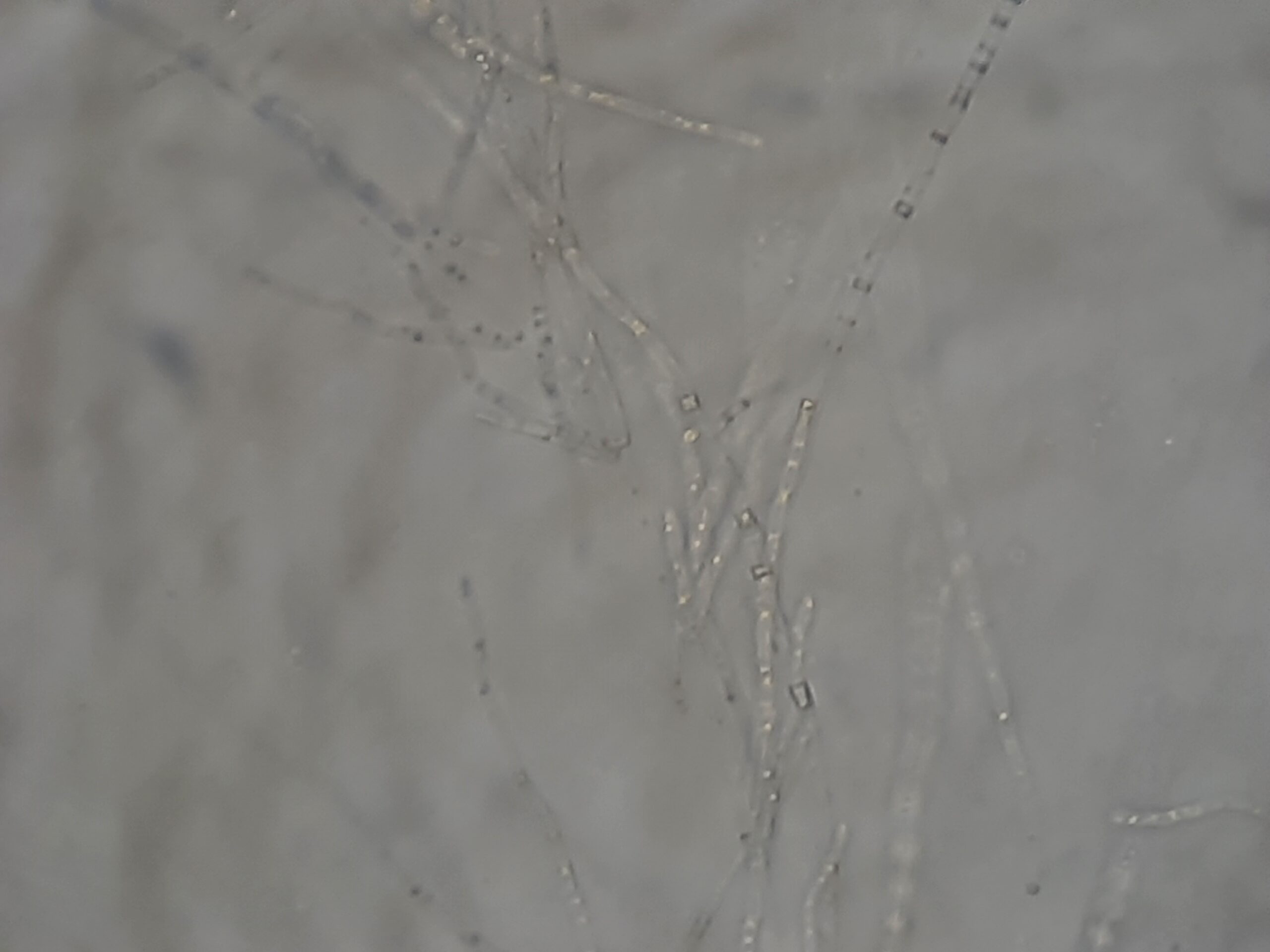
Colony morphology of Aspergillus terreus on Corn Meal Agar (CMA) showing a characteristic cinnamon-brown to sandy-beige pigmentation with a velvety, granular texture and a light-colored peripheral growth zone

Introduction & Taxonomy Aspergillus terreus is a filamentous fungus increasingly recognized as a significant emerging opportunistic pathogen. It is uniquely distinguished from other common species by its intrinsic resistance to amphotericin B, its characteristic cinnamon-brown colony color, and the production of specialized spores called aleurioconidia. …

Read more

BACTEC MGIT 960: Introduction, Principle, Procedure, Result-Interpretation, Application, and Keynotes

BD BACTEC MGIT 960 instrument display showing the real-time status and distribution of mycobacterial culture tubes

Introduction The system consists of an incubator-reader that can hold up to 960 culture tubes (7 ml size), allowing it to process approximately 8,000 specimens annually. It is widely considered a “gold standard” for culture-based drug susceptibility testing (DST) due to its speed and high recovery rate …

Read more

Glass Beads in TB Lab: Introduction, Function, Uses, and Keynotes

Sterile glass beads used for sample homogenization and bacterial culture preservation in a TB laboratory

Introduction to Glass Beads In a Tuberculosis (TB) laboratory, glass beads are essential tools primarily used to homogenize thick clinical samples and preserve live bacterial cultures. Their chemical inertness and durability make them ideal for handling the highly infectious and lipid-rich Mycobacterium tuberculosis (Mtb).  Glass beads are …

Read more

SIRE Supplement: Introduction, Composition and Function, Uses, and Keynotes

A 20 ml vial of BACTEC™ MGIT™ 960 SIRE supplement, designed for drug susceptibility testing of Mycobacterium tuberculosis

Introduction The BACTEC™ MGIT™ 960 SIRE Supplement is an essential enrichment used specifically for drug susceptibility testing (DST) of Mycobacterium tuberculosis in the BD BACTEC™ MGIT™ automated system.  The SIRE supplement is part of the MGIT™ 960 SIRE Kit. It is added to MGIT™ tubes along with specific first-line anti-TB drugs …

Read more

OADC Supplement: Introduction, Composition and Function, Uses, and Keynotes

A 15 ml vial of BBL™ MGIT™ OADC enrichment supplement used for the cultivation of Mycobacterium species.

Introduction Middlebrook OADC Growth Supplement is a vital enrichment used in microbiology to support the fastidious growth of Mycobacterium species. Its name is an acronym for its primary components: Oleic Acid, Albumin, Dextrose, and Catalase. OADC is a sterile liquid or lyophilized supplement designed to enhance the performance of Middlebrook media, such as 7H9 …

Read more

PANTA Supplement: Introduction, Composition and Function, Uses, and Keynotes

Vials of MGIT PANTA antibiotic supplement and MGIT Growth Supplement for suppressing contamination and enriching Mycobacterium tuberculosis

Introduction In microbiology and Tuberculosis (TB) diagnostics, PANTA is an antimicrobial supplement used to prevent the overgrowth of contaminating microorganisms in liquid culture media. It is primarily used with the BD BACTEC MGIT 960 system.  PANTA is a selective antibiotic cocktail designed for the primary isolation of mycobacteria from …

Read more

Acinetobacter haemolyticus-Introduction, Morphology, Pathogenicity, Lab Diagnosis, Treatment, Prevention, and Keynotes

Acinetobacter haemolyticus growth on CLED agar

Introduction Acinetobacter haemolyticus is an aerobic, non-fermenting bacterium found in nature and hospital environments. It belongs to the Acinetobacter genus, frequently causing healthcare-associated infections. It is generally considered less virulent than Acinetobacter baumannii but is increasingly recognized in human infections.  Morphology Pathogenicity Lab Diagnosis Treatment Prevention Keynotes Further Readings