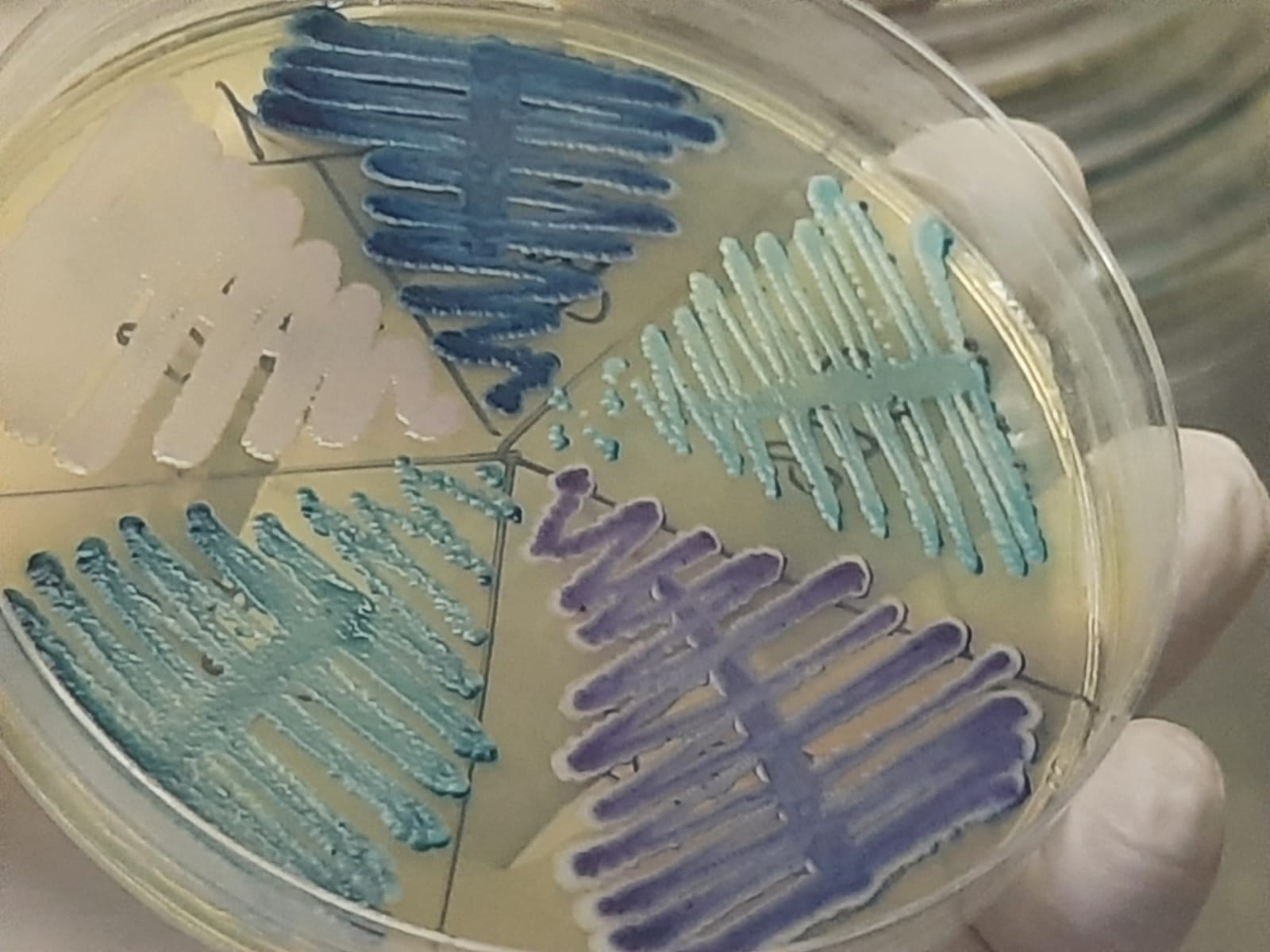
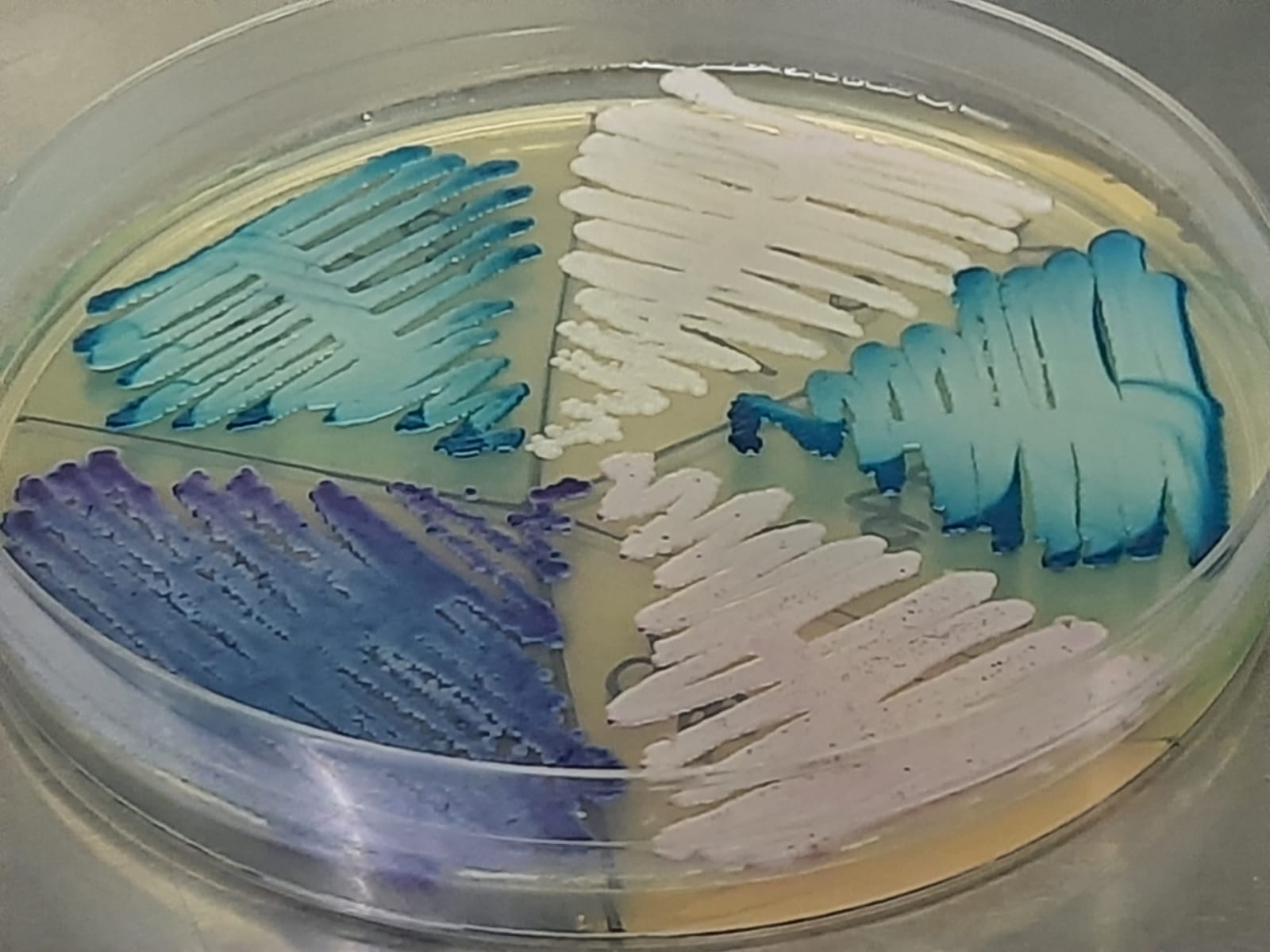
HiCrome Candida Differential Agar: Introduction, Principle, Test Requirement, Procedure, Result-Interpretation, and Keynotes

Various Candida species growth on HiCrome Candida Differential Agar after 4 days of incubation

Introduction HiCrome™ Candida Differential Agar is a specialized chromogenic medium used in clinical microbiology for the rapid isolation and presumptive identification of Candida species. The medium is designed to differentiate between major Candida species—Candida albicans, Candida tropicalis, Candida krusei (Pichia kudriavzevii), and Candida glabrata—based on colony color and morphology within 48 hours. …

Read more

Dalmau Plate Technique: Introduction, Principle, Test Requirements, Procedure, Application, and Keynotes

Dalmau Plate Microscopy at high power field (40X objective)

Introduction The Dalmau plate technique is a classic mycological method used to identify and differentiate yeast species, specifically Candida species, by observing their unique morphological features.  The technique is a specialized culture method that uses a “starvation medium” to induce the formation of characteristic structures like pseudohyphae, blastoconidia, and chlamydospores. It remains …

Read more

BAL Sample vs Sputum Sample – Key Differences

BAL Sample vs Sputum Sample – Key Differences

Bronchoalveolar Lavage (BAL) and sputum are commonly used respiratory specimens. Still, they differ significantly in terms of source, quality, diagnostic value, and clinical utility, especially in patients with tuberculosis, fungal infections, pneumonia, and oncology. Basic Definition Feature BAL Sample Sputum Sample Definition Expectorated respiratory secretion …

Read more

Isolation and Preliminary Identification of Bacterial and Yeast Colonies on Sabouraud Dextrose Agar Using the Wet Mount Technique

Isolation and Preliminary Identification of Bacterial and Yeast Colonies on Sabouraud Dextrose Agar Using the Wet Mount Technique

Introduction Sabouraud Dextrose Agar (SDA) is a commonly used culture medium in clinical mycology laboratories for the isolation of fungi, particularly yeasts and molds. Due to its acidic pH and high dextrose concentration, SDA favors fungal growth; however, bacteria and yeasts may also grow, especially …

Read more

Fungal Elements in KOH Mount of Pleural Fluid Microscopy-Introduction, Possible Fungi Observed in Pleural Fluid KOH Mount, Applications, and Keynotes

Fungal Elements in KOH Mount of Pleural Fluid Microscopy-Introduction, Possible Fungi Observed in Pleural Fluid KOH Mount, Applications, and Keynotes

Introduction KOH Mount of Pleural Fluid is a rapid, direct microscopic test used to detect fungal elements in suspected pleural infections. A 10–20% Potassium Hydroxide (KOH) solution clears cellular debris, fibrin, and protein content in pleural fluid while preserving chitin-rich fungal structures such as hyphae, …

Read more

Sterility Testing (GMP) for Mycology Lab:Introduction, Application, and Keynotes

Fungal growth on a stored normal saline plastic bottle

Introduction Sterility testing in a GMP-compliant mycology laboratory is a critical quality assurance process used to confirm that pharmaceutical products, culture media, reagents, water systems, and laboratory environments are free from viable microorganisms, including fungi and yeasts.It follows regulatory guidelines defined by WHO, EU-GMP, USP …

Read more

Broad Range PCR Assay for Fungi-Directly on Clinical Samples: Introduction, Principle, Clinical Significance, and Keynotes

Broad Range PCR Assay for Fungi-Directly on Clinical Samples-Introduction, Principle, Clinical Significance, and Keynotes

Introduction Broad-range PCR assays for fungi are molecular diagnostic methods designed to detect a wide spectrum of fungal pathogens directly from clinical samples such as blood, BAL, sputum, CSF, tissue biopsies, and sterile body fluids.These assays target highly conserved fungal genomic regions, primarily the Internal …

Read more

Fungal Elements in KOH Mount of Sputum Microscopy-Introduction, Fungal Elements Observed in Sputum KOH Mount, Applications, and Keynotes

Fungal Elements in KOH Mount of Sputum Microscopy at a magnification of 1600X

Introduction KOH mount of sputum is a rapid, direct microscopic technique used to detect fungal elements in the respiratory tract. A 10–20% Potassium Hydroxide (KOH) solution digests mucus, epithelial cells, and debris in sputum, while preserving the chitin-rich fungal cell walls, making them appear clear, …

Read more