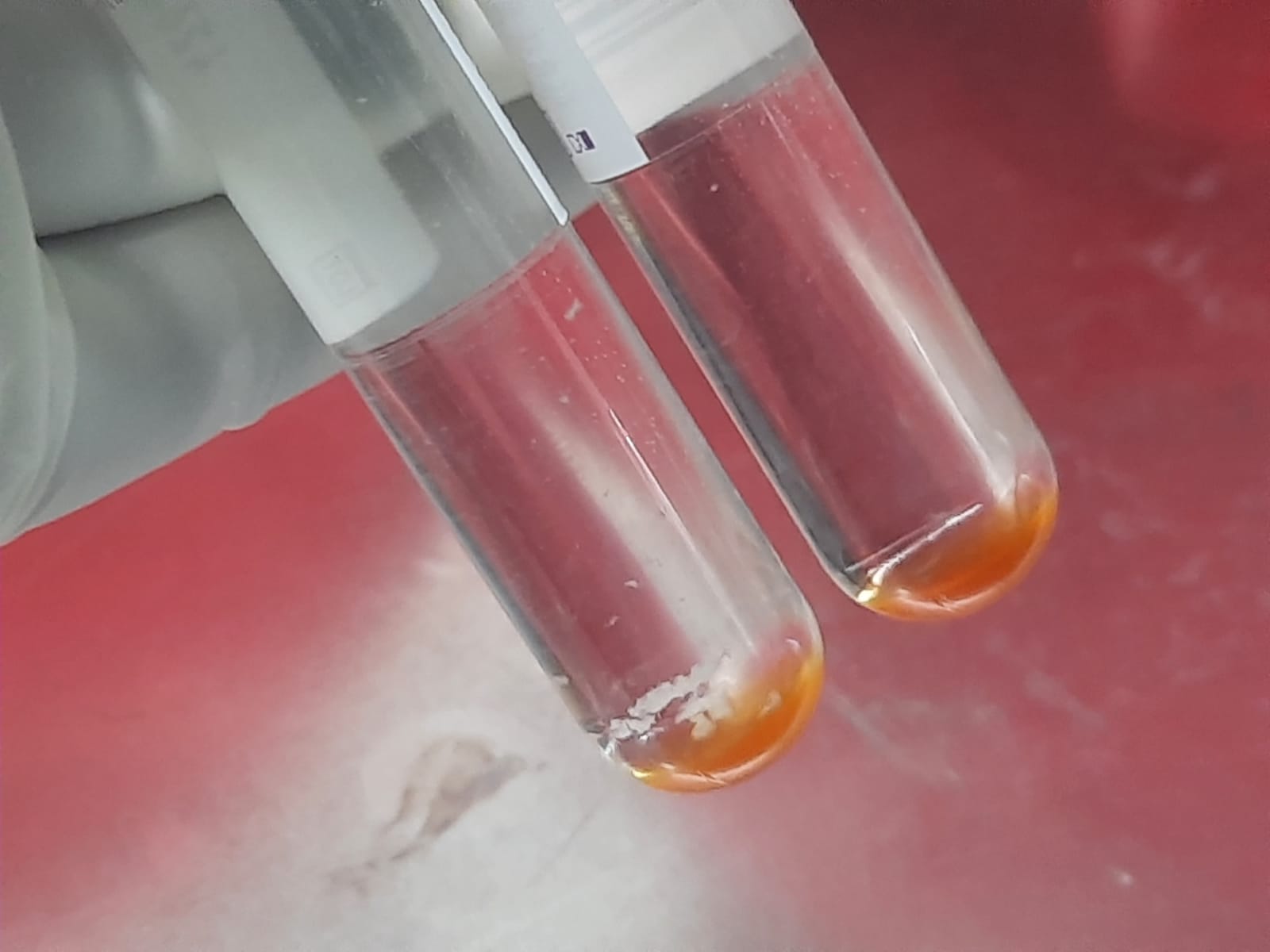
β-D-Glucan: Introduction, Principle, Clinical Significance, and Keynotes

Introduction β-D-Glucan (BDG) is a polysaccharide component of the fungal cell wall, widely present in species such as Candida, Aspergillus, Fusarium, and Pneumocystis jirovecii. Since it is released into the bloodstream during invasive fungal infections (IFIs), detection of BDG has become a valuable non-culture-based diagnostic …

Read more

Blastomyces-Antigen Testing: Introduction, Principle, Clinical Significance, and Keynotes

Introduction Blastomyces dermatitidis is a dimorphic fungus responsible for blastomycosis, a potentially life-threatening systemic mycosis. It is often found in soil enriched with decaying organic matter, especially near rivers and lakes. Traditional diagnosis relies on culture, microscopy, or histopathology, which may take several weeks. To …

Read more

Throat Swab Gram stain: Introduction, Report-Interpretation, Clinical Significance, and Keynotes

Gram positive and Gram negative bacteria in throat swab Gram stain photomicrograph at a magnification of 4000X

Introduction A throat swab Gram stain is a rapid, initial diagnostic test performed on specimens collected from the oropharynx or tonsillar region. It helps to identify bacterial flora, pathogens, and inflammatory response. While culture and molecular methods provide definitive diagnosis, Gram staining offers early guidance …

Read more

Blood Culture–Positive Yeasts: Introduction, Common molds, Comparison, and Keynotes

Gram-positive budding yeast-like cells, oval to elongated, arranged singly, in pairs, and in short pseudohyphae-like forms in Gram staining of culture microscopy at a magnification of 4000X

Introduction Unlike molds, yeasts are the most commonly recovered fungi in blood cultures. Candidemia is among the leading causes of bloodstream infections in immunocompromised and critically ill patients. Yeasts such as Candida, Cryptococcus, and Trichosporon are responsible for significant morbidity and mortality. Blood culture positivity …

Read more

Blood Culture–Positive Molds: Introduction, Common molds, Comparison, and Keynotes

Blood Culture–Positive Molds

Introduction Blood cultures are the cornerstone for diagnosing fungemia, but while yeasts (Candida spp.) are frequently detected, molds are rarely recovered in blood culture systems. This is because most molds (Aspergillus, Mucorales) cause tissue-invasive disease without sustained fungemia. However, certain molds such as Fusarium spp. …

Read more

Yeasts-Colorimetric Antifungal Susceptibility Testing: Introduction, Principle, Clinical Significance, and Keynotes

Yeasts-Colorimetric Antifungal Susceptibility Testing-Introduction, Principle, Clinical Significance, and Keynotes

Introduction Yeasts, especially Candida and Cryptococcus species, are frequent causes of opportunistic infections in immunocompromised patients. Determining their antifungal susceptibility is crucial for guiding effective therapy. While broth microdilution methods (CLSI/EUCAST) serve as reference standards, they are labor-intensive and time-consuming. Colorimetric antifungal susceptibility testing systems …

Read more

Yeast Identification by Chromogenic Media: Introduction, Principle, Clinical Significance, and Keynotes

Yeast Identification by Chromogenic Media (HiMedia)

Introduction of Yeast Identification by Chromogenic Media (HiMedia) Opportunistic yeasts, especially Candida species, are frequent causes of infections ranging from superficial candidiasis to life-threatening systemic disease. Conventional identification based on culture and biochemical tests can be time-consuming and may not reliably distinguish closely related species. …

Read more

Fungal Identification by PCR-Sequencing (Sanger): Introduction, Principle, Clinical Significance, and Keynotes

Pure culture of Candida

Introduction Accurate identification of fungi is critical for clinical, environmental, and epidemiological purposes. Traditional culture and morphology-based methods are time-consuming and may misidentify cryptic or closely related species. PCR amplification followed by Sanger sequencing of conserved genetic loci (e.g., ITS, 18S rRNA, 28S rRNA, β-tubulin, …

Read more