Sterility Testing (GMP) for Mycology Lab:Introduction, Application, and Keynotes

Fungal growth on a stored normal saline plastic bottle

Introduction Sterility testing in a GMP-compliant mycology laboratory is a critical quality assurance process used to confirm that pharmaceutical products, culture media, reagents, water systems, and laboratory environments are free from viable microorganisms, including fungi and yeasts.It follows regulatory guidelines defined by WHO, EU-GMP, USP …

Read more

Broad Range PCR Assay for Fungi-Directly on Clinical Samples: Introduction, Principle, Clinical Significance, and Keynotes

Broad Range PCR Assay for Fungi-Directly on Clinical Samples-Introduction, Principle, Clinical Significance, and Keynotes

Introduction Broad-range PCR assays for fungi are molecular diagnostic methods designed to detect a wide spectrum of fungal pathogens directly from clinical samples such as blood, BAL, sputum, CSF, tissue biopsies, and sterile body fluids.These assays target highly conserved fungal genomic regions, primarily the Internal …

Read more

Fungal Elements in KOH Mount of Bile Microscopy-Introduction, Fungal Elements Observed in Bile KOH Mount, Applications, and Keynotes

Bile sample before centrifugation for KOH mount and fungal culture

Introduction KOH Mount of Bile is a direct microscopic examination technique used to detect fungal elements in bile fluid collected during ERCP, biliary drainage, cholecystectomy, or liver procedures.Because bile contains mucus, epithelial debris, fats, and pigments, a 10–20% Potassium Hydroxide (KOH) solution is used to …

Read more

Fungal Elements in KOH Mount of Urine Microscopy: Introduction, Fungal Elements Observed in Urine KOH Mount, Applications, and Keynotes

Fungal elements in KOH Mount of Urine Microscopy- Introduction, Fungal Elements Observed in Urine KOH Mount, Applications, and Keynotes

Introduction Potassium Hydroxide (KOH) mount is a simple, rapid, and cost-effective microscopic technique used to detect fungal elements in various clinical specimens, including urine samples. When fungal infection of the urinary tract (funguria) is suspected—especially in immunocompromised, diabetic, or catheterized patients—KOH mount helps visualize yeast …

Read more

Bio-Incubator: Introduction, Application, and Keynotes

This Bio-Incubator provides a stable environment for the growth and incubation of microbial cultures, enzymatic reactions, and biological assays. The display screen shows the process status as “FINISHED” with a temperature reading of 27.2°C, indicating the incubation cycle is complete. It is commonly used in clinical, molecular, and research laboratories for applications such as culture incubation, spore testing, and enzyme activation.

Introduction A Bio-Incubator is a laboratory device designed to provide a controlled environment of temperature, humidity, and time for the growth and maintenance of microbial cultures, cell lines, and biological reactions. It is an essential tool in microbiology, molecular biology, biotechnology, and clinical diagnostics.By maintaining …

Read more

Direct Microscopy-India Ink smear-Introduction, Uses, and Keynotes

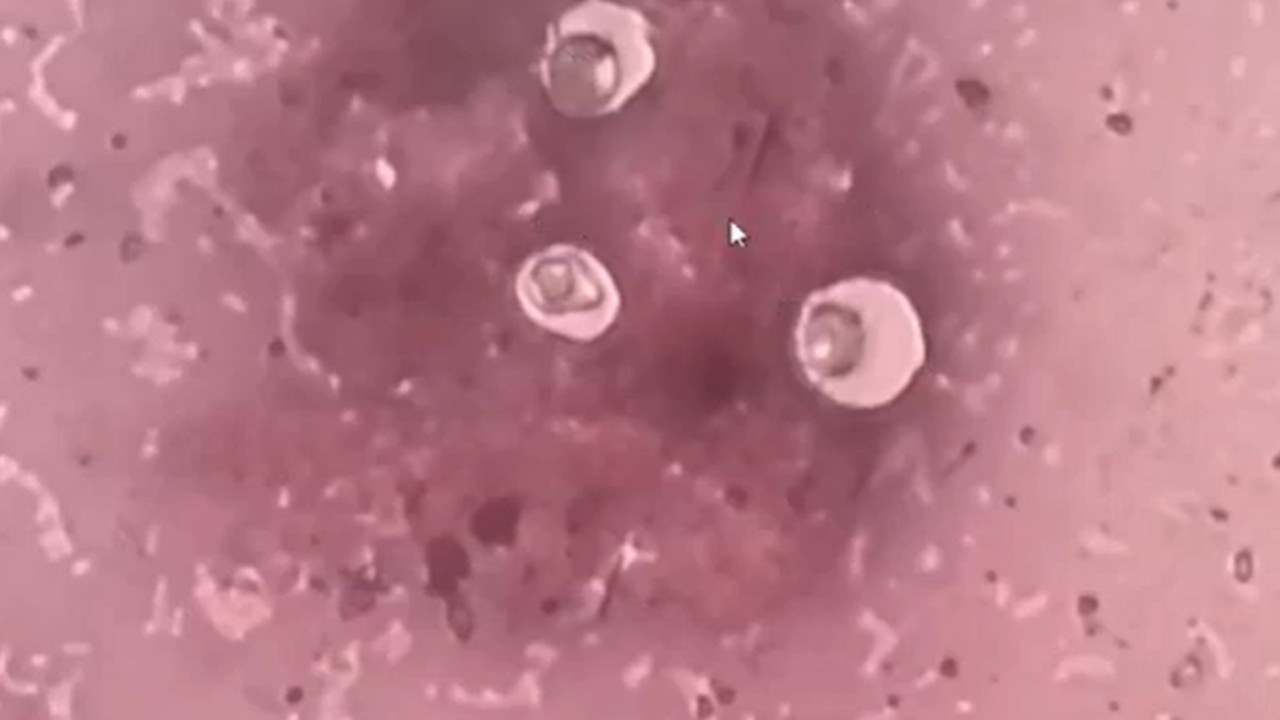
Direct Microscopy-India Ink smear showing encapsulated yeast cells

Introduction India Ink Smear is a direct microscopic technique used for the rapid identification of encapsulated fungi, particularly Cryptococcus neoformans and Cryptococcus gattii, in clinical specimens such as cerebrospinal fluid (CSF), sputum, and urine. This simple, rapid, and cost-effective test allows visualization of the thick …

Read more

Multiplex PCR assay-Directly on CSF: Introduction, Principle, Clinical Significance, and Keynotes

Introduction Multiplex Polymerase Chain Reaction (PCR) directly on Cerebrospinal Fluid (CSF) is an advanced molecular diagnostic technique designed to detect multiple pathogens simultaneously from a single CSF sample. It offers rapid, sensitive, and specific identification of bacterial, viral, and fungal agents responsible for central nervous …

Read more

Bronchoalveolar lavage (BAL) Gram stain: Introduction, Report-Interpretation, Clinical Significance, and Keynotes

Gram negative cocobacilli in Gram staining of BAL and pus cells

Introduction Bronchoalveolar lavage (BAL) is a diagnostic procedure used to collect specimens from the lower respiratory tract, particularly from the alveolar spaces. It is performed by instilling sterile saline into a segment of the lung via a bronchoscope and then aspirating it back. Gram staining …

Read more